
Securing the world’s largest island is a tough task due to the harsh environment
Relief in European capitals after Donald Trump ruled out force over Greenland quickly gave way to a tougher question: could Europe defend the island?
Now that Trump has ruled out seizing Greenland by force, European leaders seem relieved, narrowly averting another crisis, reports Euractiv.
Trump’s Claims vs. Arctic Intelligence
Trump insists that Washington must secure a stake in Greenland to bolster NATO and US security.
He claims that Greenland is “surrounded” by Russian and Chinese ships – an assertion disputed by two people briefed on the latest intelligence, and one that NATO maritime command refuses to confirm.
But even if the island isn’t immediately under threat from Washington or Moscow, Trump’s comments have raised serious questions about how Europe could defend it, particularly given its harsh environment.
European Complacency and Strategic Assets
“Europe’s problem is not that Washington sees Greenland as a strategic asset. It is that Europe has largely failed to do so itself,” wrote Justina Budginaite-Froehly, a non-resident senior fellow at the Washington, D.C.-based Atlantic Council.
“That complacency is now dangerous.”
Historically, Denmark has organised the defence of the island to address environmental threats such as oil spills and illegal fishing, with military imperatives not prominently on the priority list. Recent Danish defence investments suggest Copenhagen is taking the island’s defence more seriously, several NATO diplomats and officers told Euractiv.
The Difficulty of Arctic Warfare
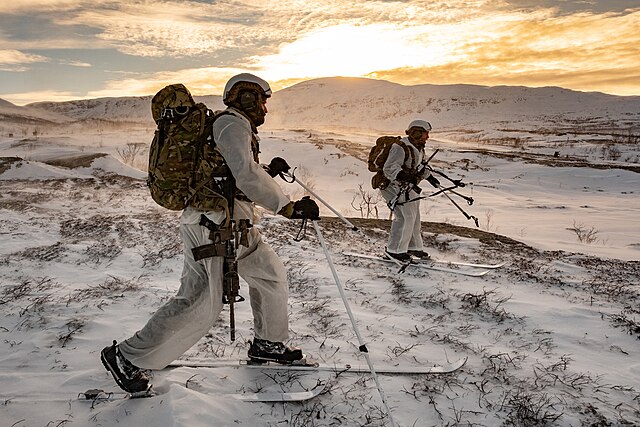
As tensions escalated, Denmark and Greenland demanded the launch of a NATO-led mission. Dozens of troops swiftly deployed to assess the infrastructure required for a permanent presence. Any international military presence would require troops trained to withstand Greenland’s icy and rough conditions.
Few countries have trained troops for such hostile environments. Tanks and most land-based systems are useless on Greenlandic ice, so Danes rely on dog sledges.
Only a handful of NATO allies operate in extremely cold environments. Norway, Sweden, and Finland have similar terrain. France, the Netherlands, and the UK have trained mountain troops.
“You’d need a couple hundred fighting troops,” said Siemon Wezeman of the Stockholm International Peace Research Institute (SIPRI).
But such troops would most likely come from Western countries, since the Nordics have borders with Russia to defend.
Maritime Challenges in Ice-Filled Waters
The maritime presence around Greenland would need to increase if ship threats develop. NATO already deploys naval groups in the high north, Arctic, Baltic, and Mediterranean, using assets from countries like Norway, Germany, and Denmark.
Not all ships are suited for ice. Only Denmark and Canada in NATO have ice-resistant ships for Arctic waters.