
President Donald Trump spent the first month of the year escalating tensions with Denmark over his threats to acquire Greenland, an autonomous territory within the Kingdom of Denmark. Although Trump later withdrew his proposal, the episode unsettled much of Europe’s political mainstream.
According to a CNN analysis by Christian Edwards, it prompted several nationalist leaders, previously aligned with Trump, to distance themselves from his rhetoric.
European Nationalists Slam “Imperial Ambitions”
Jordan Bardella, president of France’s far-right National Rally, accused Trump of “coercion” and slammed his “imperial ambitions.”
Similarly, Alice Weidel, co-leader of the Alternative for Germany (AfD), stated that Trump had “violated a fundamental campaign promise – not to interfere in other countries.”
Analysts tell CNN that this aggressive push to annex Greenland was a major blunder.
By threatening the national sovereignty of a European country, the administration has undermined the very “patriotic” nationalism it hoped to cultivate among European allies.
“Greenland was a major miscalculation,” says Ivan Krastev, chair of the Centre for Liberal Strategies.
“Trump is a nationalist who does not understand the nationalism of others. When it comes to land, his view is that of a real estate guy: he believes he’s gentrifying the world.”
Territorial Integrity: A Red Line for Europe
For European nationalists, land and borders hold deep historical significance. “European nationalism is very sensitive about territorial integrity because that is what shattered Europe before,” Krastev added.
This historical memory makes Trump’s actions indefensible even to those who share his anti-immigration or anti-green agendas.
While leaders in France and Germany were vocal, responses from Central and Eastern Europe were more restrained.
Viktor Orbán, Hungary’s prime minister and Trump’s loudest cheerleader, dodged questions by calling it an “in-house issue,” while Poland’s President Karol Nawrocki called for a “diplomatic” resolution.
Cracks in the “Illiberal Internationale”
During the World Economic Forum in Davos, Trump sought to retract his threats but managed to draw further criticism.
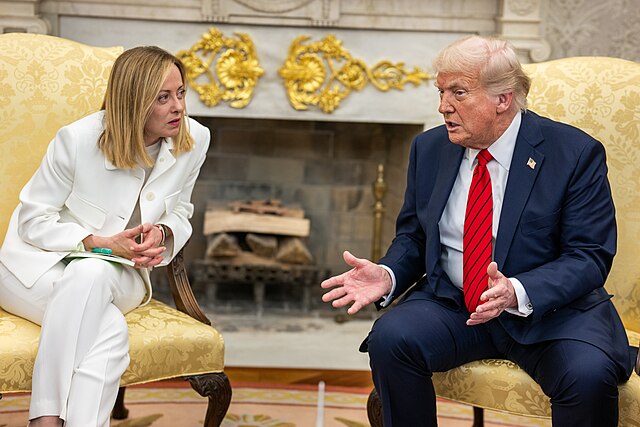
He claimed, without evidence, that NATO troops remained behind front lines in Afghanistan, a comment that Italy’s Prime Minister Giorgia Meloni called “unacceptable.”
“Friendship requires respect,” Meloni stated tersely.
Even Nigel Farage, leader of Reform UK and a longtime Trump supporter, distanced himself, calling the Greenland threats a “very hostile act.”
Jeremy Shapiro, research director at the ECFR, concludes that the administration’s hope to build a “civilizational” alliance is backfiring.
The Greenland debacle is simply the latest example of Trump “stepping on his own feet.”