
The former U.S. President’s remarks about acquiring the territory have chilled relations between American and Greenlandic researchers, pausing vital projects and casting doubt on future collaboration.
U.S. President Donald Trump’s statements about acquiring Greenland have strained relations between American and Greenlandic researchers. This has led to the suspension of some projects and cast doubt on future collaboration, according to the Japan Times.
Scientific Collaboration on Ice
Ross Virginia, a professor emeritus of environmental studies at Dartmouth College, said a climate program he ran with Greenlandic colleagues was halted by “mutual agreement” due to the tensions. “Direct cooperation is paused while we determine what a future vision for collaborative science diplomacy, particularly involving education and younger students, could look like,” he said.
A U.S. scientist, who requested anonymity due to concerns about professional relationships, said that some of his research partnerships in Greenland were suspended even before Trump intensified discussions of annexation in January. He added that he halted fieldwork out of respect for Greenlandic colleagues.
Although Trump has recently moderated his position on U.S. control of Greenland, a semi-autonomous territory of Denmark with a population of about 57,000, ongoing tensions are disrupting scientific research that is essential for understanding climate change both in the Arctic and worldwide.
A Global Climate Bellwether
Greenland is experiencing rapid warming, and its vast ice sheet holds enough fresh water to raise global sea levels by 23 feet.
Scientists are studying how the ice sheet is becoming unstable and what these changes, together with shifts in sea ice, could mean for the Atlantic Meridional Overturning Circulation.
This major ocean current, which moves warm and cold water across great distances, is believed to be weakening, with potential consequences for weather patterns in many countries.
Funding Fears and Local Caution
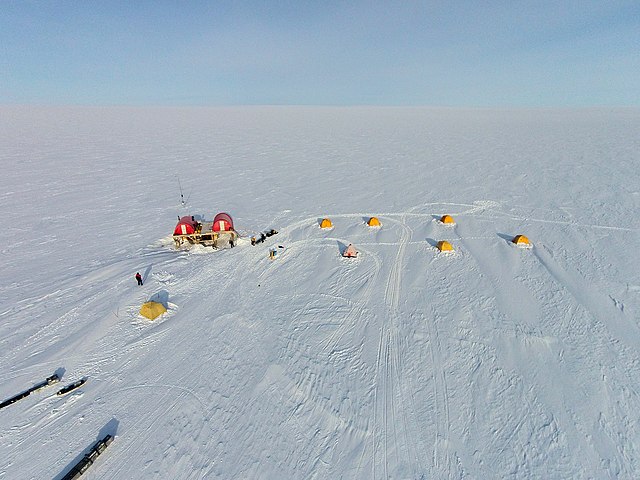
The U.S. National Science Foundation (NSF) funds much of this research. The agency supports Summit Station, a year-round American research facility located at the highest point of the Greenland ice sheet, which often collaborates with Greenlandic scientists and local communities. According to a spokesperson, the NSF is currently supporting 19 active projects in Greenland, totaling 43 individual awards and $26 million in funding.
A Greenlandic scientist working at a government institution said that researchers are now more cautious about accepting American funding or collaborating with U.S. scientists due to concerns about public perception.
Building Bridges for Future Science
Fiamma Straneo, an oceanographer at Harvard University who helped organize a joint statement of support for Greenland from U.S. scientists, said she’s particularly worried about the consequences for planned projects that haven’t yet gotten off the ground. “It’s much harder to create new collaborations with federal U.S. funding,” she said, citing wariness on the part of Greenlanders.
Straneo has worked with local researchers on the island for almost 20 years. Because of fears the U.S. will try to influence politics on the island, she said, “they are very worried about this.”