

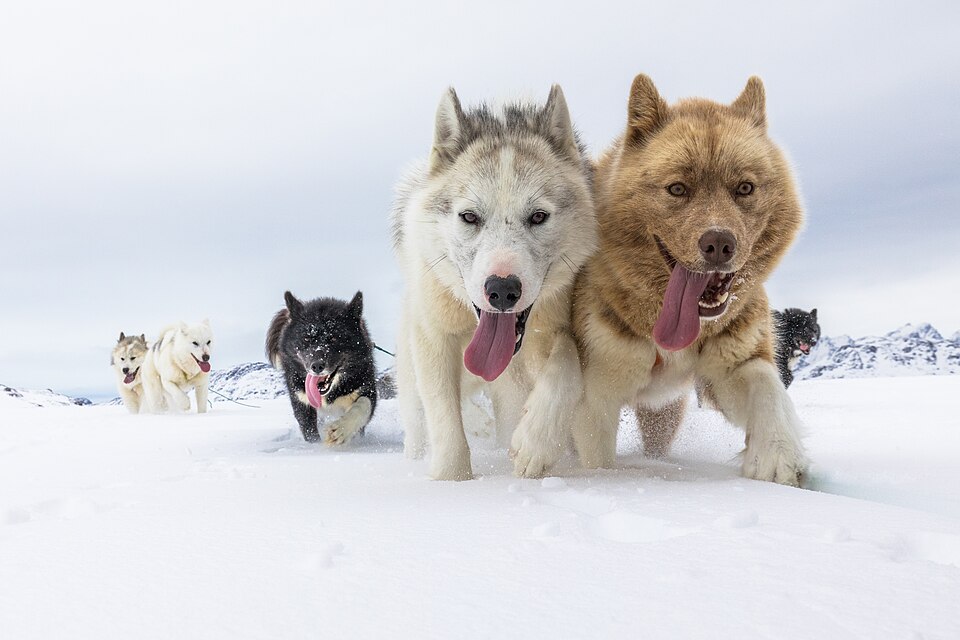
In an age of electric cars, GPS navigation, and synthetic insulation, one of the most reliable forms of Arctic transportation still breathes, eats, and howls. Meet the Greenland dog.
To many Western readers, sled dogs conjure images of friendly huskies racing tourists across snowy trails. The Greenland dog, however, belongs to a far older and harsher world—one where survival, not recreation, shaped both animal and human alike.
A Breed Older Than History Books
The Greenland dog, known locally as Kalaallit Qimmiat, is among the oldest dog breeds on Earth. Genetic studies trace its lineage back thousands of years to the dogs that accompanied the Inuit as they migrated across the Arctic from Siberia into Greenland.
Unlike modern breeds refined for companionship or aesthetics, Greenland dogs were shaped by necessity. They pulled heavy sleds over sea ice, tracked seals across frozen fjords, and endured months of darkness and temperatures that could kill most animals within hours. They were never pets. They were partners in survival.
Built for the Cold, Not the Couch
At first glance, the Greenland dog looks familiar—wolf-like, thick-coated, powerful. But spend time around them and the differences become clear.
These dogs are larger and heavier than Siberian huskies, with immense strength and stamina. Their dense double coat shrugs off Arctic winds, while their broad paws distribute weight efficiently across snow and ice. Every feature serves a purpose.
Temperamentally, they are not eager-to-please companions. Greenland dogs are independent, pack-driven, and intensely focused on work. Affection exists—but it is subtle, practical, and earned. They do not fetch. They do not beg. They pull.
Life in the Pack
Traditionally, Greenland dogs live outdoors year-round in packs, often tethered individually but socialized through constant proximity. Hierarchies are strict. Fights are not uncommon. Weakness is not tolerated—not by the dogs, and not by the environment they inhabit.
To Western sensibilities, this can seem harsh. But in the Arctic, sentimentality has never kept anyone alive.
Each dog must pull its weight—literally. A typical sled team can include 10 to 16 dogs, hauling supplies, people, or hunted game across vast distances where mechanical transport often fails.
Even today, in northern Greenland, dog sleds remain more reliable than snowmobiles on sea ice that shifts, cracks, and refreezes unpredictably.
A Cultural Heritage Under Protection
Greenland dogs are not just working animals; they are living cultural heritage.
The Greenlandic government strictly regulates the breed. Export is heavily restricted, and crossbreeding with foreign dogs is prohibited in large regions of the country. In some areas, it is illegal to own non-Greenlandic dogs at all.
These measures exist to protect a breed that is inseparable from Inuit history and identity. As climate change shortens sledding seasons and modern technology encroaches, the Greenland dog’s role is under pressure. Preserving the breed means preserving a way of life.
Not a Pet And That’s the Point
Occasionally, Western enthusiasts attempt to adopt Greenland dogs, drawn by their rugged beauty and mythic reputation. This rarely ends well.
Without cold climates, space, and demanding physical work, Greenland dogs become frustrated and destructive. They are not designed for suburban living, obedience classes, or casual companionship. And that’s not a flaw.
In a world increasingly shaped around human comfort, the Greenland dog remains unapologetically shaped by nature.
The Sound of the Arctic
Travelers who visit northern Greenland often remember one sound more vividly than the wind or the ice: the collective howl of hundreds of Greenland dogs echoing across frozen landscapes.
It is not a friendly greeting. It is a declaration—ancient, raw, and enduring.
The Greenland dog does not belong to the modern world. The modern world simply hasn’t managed to replace it yet.