

Greenland is one of the most unique tourist destinations in the Northern Hemisphere, writes Paco Nadal for El País.
It is a place that fascinates me, one I’ve visited countless times, and where I learned to love the white deserts and the vast, empty, icy spaces. It is a land where life remains deeply rooted in a harsh environment that only the Inuit have managed to master and make their home.
Contrary to its remote reputation, Greenland is accessible to the general public, especially the south and west coasts. However, forget about travelling independently. There isn’t a single road connecting the two towns. Movement depends on helicopters, boats, or snowmobiles. It is a destination best explored through specialised agencies with local infrastructure.
The Gateway: From War Relics to Nuuk’s New Era
For years, the gateway to this affordable Greenland was two airstrips built by the U.S. Army during World War II for its bombers, later converted into the island’s only international airports: Narsarsuaq and Kangerlussuaq.
However, a turning point was reached in November 2024, with the opening of the new international airport in Nuuk, the capital. For the first time, the heart of Greenland can receive direct flights from large commercial aircraft.
Despite this, I still prefer arriving through Narsarsuaq. The moment you set foot on the ground, it sets the scene: a black ribbon of asphalt, a few fuel depots, and a supermarket that sells everything from chocolate to rifles, all set in a landscape devoid of trees, with the first icebergs floating in the neighbouring fjord.
Qassiarsuk: Where the Vikings Discovered America
From Narsarsuaq, you cross the Erik Fjord to Qassiarsuk, a village of houses painted in the colours of a board game. This is a place of profound history. Around 1000 AD, Erik the Red arrived here after being banished from Iceland. He found a land experiencing a period of warming and founded the settlement of Brattahlíð.
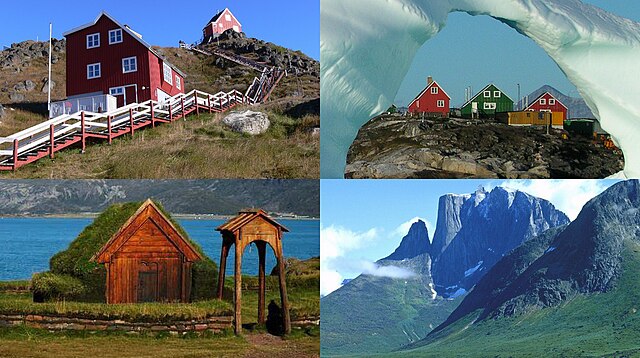
His son, Leif Erikson, reached the shores of Newfoundland, Canada, from here, making these men the first Europeans to “discover” the American continent.
In Qassiarsuk, you can see a reconstruction of the church Leif built for his wife; it is the first Christian church in the Americas, predating the Spanish conquistadors by 500 years.
The Jewel of the South: Tasermiut Fjord
For those seeking natural beauty, Tasermiut Fjord is the jewel. It is a narrow, 70-kilometre-long inlet flanked by enormous black rock towers and sheer vertical walls rising to 1,500 meters. It is an almost surreal landscape with no trace of human life, best explored by boat or kayak.
Further north is Igaliku, the most picturesque village on the island. It was the residence of the first Christian bishop in 1126, and today, visitors can still see the ruins of the island’s first cathedral.
Ilulissat: The Birthplace of the Titanic Iceberg
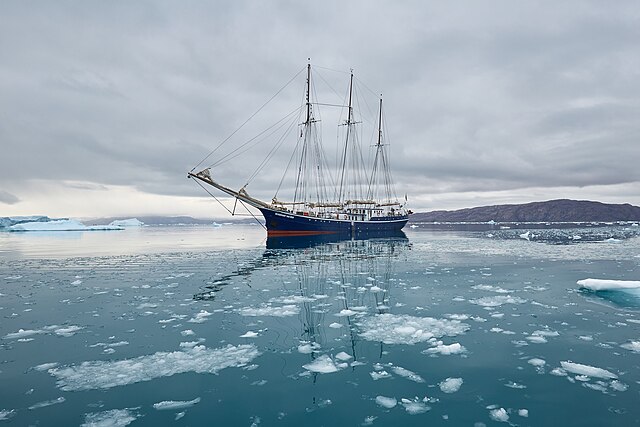
On the west coast, Ilulissat is the main tourist attraction in Disko Bay. Its colourful houses contrast with the bluish-white of the Ilulissat Icefjord, a natural spectacle where the Jakobshavn Isbræ—the most active glacier in the Northern Hemisphere—releases between 20 and 25 billion tons of ice into the sea each year. It is widely believed that the iceberg that sank the Titanic calved from this very spot.
A Fragile Prosperity
Greenland today has achieved a level of development and political autonomy unlike anything in its history. However, its relationship with Copenhagen remains fraught, and its strategic value makes it a target for global ambitions. As the world eyes its resources, one is reminded of the fragility of this unique culture.
If external pressures succeed in disrupting this balance, as the replicant in Blade Runner said: “All those moments will be lost in time, like tears in rain”, writes Paco Nadal.